

ORTHODOX WONDER
Health · Wonder · Orthodox Life
Remembering Eden.
On a Prince Albert can, a cold mountain morning, and the country we cannot stop longing for
May 19, 2026
I · The Remembrance
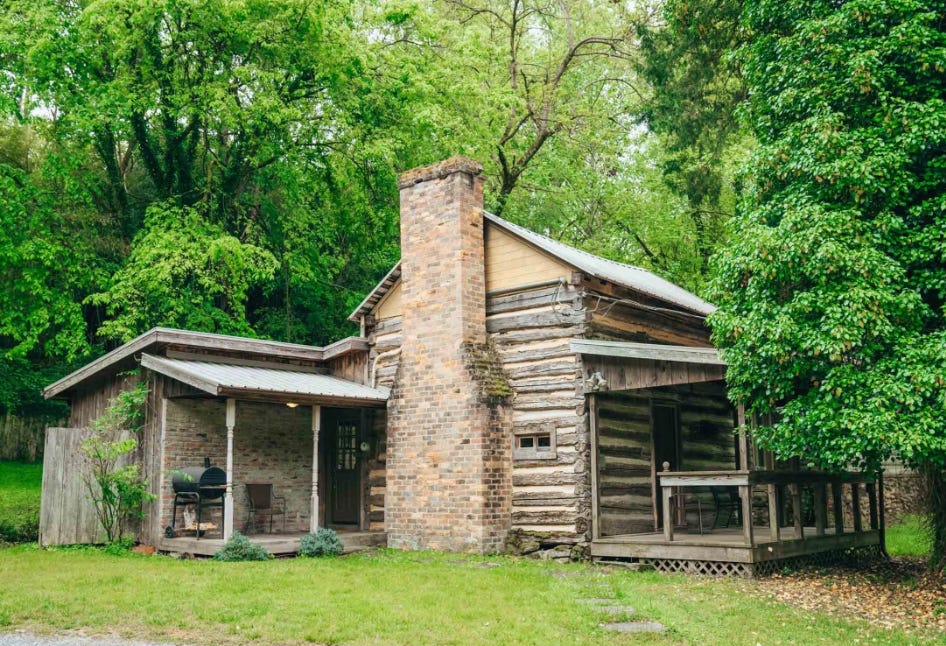
There was a farm in the mountains of Appalachia where my grandparents lived, and to reach it you climbed nearly a mile in elevation over roads that civilization had not particularly bothered to finish. Even in the middle of July the mornings were cold enough to make your breath visible, and the winters were something the lowlands have no word for. There was no electricity to speak of. In the evenings the house glowed with oil lamps. A battery-powered radio brought voices from another world that felt very far away and not especially important. Water came from a cistern and a hand pump in the kitchen. The outhouse stood at the edge of the yard where the animals began. It was, by any modern measure, a hard way to live.
I was a small boy in the early 1970s when I first remember it clearly, and what I remember most is the creek. I would spend whole mornings catching crawdads from the cold water, lifting stones to find them, and saving the best ones in a Prince Albert tobacco can to carry back and show my sisters. The crawdads never seemed to mind very much, and neither did I.
That memory has returned to me across five decades now, unbidden and unchanged. It surfaces in hospital corridors at three in the morning. It comes back in the middle of prayer. It arrives sometimes for no reason at all, carrying with it the smell of woodsmoke and cold creek water and something else I have never been able to name precisely. I used to call it nostalgia. I have come to think that was too small a word. It is not the past I am longing for. It is something the past was pointing toward.
We are, it turns out, not strangers to wonder. We are exiles who cannot quite forget the country we came from. Every human life is haunted by a landscape we have never visited in this body, by the fragrance of something we have never, in this life, smelled. The theologians call this the vestigial image, the imago Dei bruised but not erased. I call it the ache. You probably know exactly what I mean.
A garden glimpsed at dusk. The first cold breath of October. The moment a piece of music resolves and for just a second something in your chest lifts toward it, not with pleasure exactly but with longing, as though the beautiful thing is not the thing itself but a door, and you half-remember what is on the other side.
II · Scripture
“He has made everything beautiful in its time. He has also set eternity in the human heart; yet no one can fathom what God has done from beginning to end.”
— Ecclesiastes 3:11
The Preacher does not say God has placed knowledge of eternity in the heart, but eternity itself, as one plants something living that will press against its container from the inside and refuse to be comfortable. This is not a metaphor for vague spiritual longing. It is an ontological statement: we are made from above, shaped around an absence the shape of God, and no earthly beauty, however staggering, will fill it completely. It will only, at its best, remind us.
The old mountain farm reminded me. Not because poverty is holy, or because simplicity is a virtue in itself, though the Fathers have a good deal to say about both. It reminded me because it was legible. Water came from where water comes from. Light came from fire. Animals were animals and you knew their names and they knew yours. The world had not yet been translated into abstraction. And in that legibility, something ancient in me relaxed and said: yes, this is closer to what things actually are.
This is why the beautiful is never simply pleasant. It wounds. It convicts. The Orthodox Tradition understands this entirely: beauty is not decoration. Beauty is theology. The icon does not depict heaven the way a postcard depicts a resort. The icon is a window, and the light comes from the other side. So too, I would venture gently, did that oil-lit kitchen in the mountains.
III · From the Saints
“The soul, having tasted the things of the Spirit even a little, is seized with a longing and love for God. It cannot bear to be separated from that sweetness, but runs always toward it, as though it were being drawn by the fragrance of costly ointment.”
— St. Macarius the Great, Homily 15
Abba Macarius knew the desert: cracked earth, scorching days, the silence that presses on the ears like a hand. He was not speaking from a comfortable chair about pleasant feelings. He was speaking from a place scraped clean enough to notice the fragrance. The word he reaches for, ointment, is deliberate. It is the same image as the Bride in the Song of Songs: Draw me after you, let us run. The King has brought me into his chambers. The longing and the running are the same motion.
There is a kind of simplicity, whether the desert or the Appalachian ridge, that accomplishes what Abba Macarius describes by subtraction. Remove enough noise and what remains is not emptiness but presence. The Desert Fathers sought that by going into the wilderness. My grandparents lived it, I think, without particular theology behind it, simply because that is how their people had always lived. And a small boy with a Prince Albert can full of crawdads stumbled into the edge of it without knowing what it was.
He has been trying to find his way back ever since.
IV · Denouement
The memory of that farm is not, I have finally come to understand, a memory of the past. It is a memory of the future. Or more precisely: it is a memory of what is, seen briefly and clearly through the thin place that childhood sometimes provides before the world’s noise thickens around us.
The Orthodox understanding of the Kingdom of God is not that it lies ahead of us as something yet to be constructed. Our Lord Himself was precise about this: the Kingdom does not come by observation, not lo here, not lo there. It is found, He said, within you. The Fathers understood this to mean that the Kingdom is discovered through the noetic faculty, the eye of the heart, when that eye has not been darkened by passion and distraction and the noise we voluntarily pour into ourselves. The Liturgy does not rehearse a future hope. It enters a present reality from the inside. And the ache, the longing that rises in the chest at the smell of woodsmoke or cold water or the first cold morning of September, is not mere sentiment. It is anamnesis, the sacred remembering that the Church herself performs at every Eucharist, and it rises from that same interior country. We are creatures who carry the Kingdom as a seed, and we carry its grammar in our bones.
I think of my grandmother moving through that kitchen in lamplight, filling a kettle from the hand pump, unhurried in a way that had nothing to do with having nowhere to go and everything to do with knowing where she was. I think of the animals audible through the walls in the morning, the particular cold of those summer dawns, the spring thaw that turned the creek loose and fast and cold enough to ache in your hands when you lifted the stones. I think of the crawdads in the Prince Albert can, regarding me with what I now recognize as considerable patience.
None of it was Eden. But I now believe it was a Remembrance of Eden.
The body that cannot feel wonder is already ill, even if the labs come back perfect. And the soul that has stopped noticing beauty, that has armored itself against astonishment, has done something the Fathers would recognize as a spiritual pathology: acedia, the noonday demon, the grey sameness that makes even the Eucharist feel routine and the first cold morning of spring feel unremarkable.
Pay attention to what makes you ache. The crawdads in the creek. The lamp on the table. The particular sound of a mountain morning before anyone else is awake. Write it down. Bring it to the Divine Liturgy, which is itself an act of holy remembering. And then, with more urgency than I am competent to convey, bring it to your priest. These are not small private sentimental experiences. They are evidence that the imago Dei in you is still turned, however crookedly, toward its source, and toward an Eden that is not only behind us but, by the mercy of God, still ahead.
Nothing here is instruction or spiritual direction, only the observations of a nurse and a layman writing with the blessing of his priest. Please bring what stirs in you to your father confessor, who can guide you far better than these pages ever could.
Lord Jesus Christ, Son of God, have mercy on me, a sinner.
Beautiful and spot on…we share similar childhood memories. Now at 60+ I found my way back to a farm, often working alone with my memories and thoughts of the unimaginable beauty of even the weeds.
Lord have mercy on us.
Thank you!
This reflection makes me cry. Maybe just because others understand this. But perhaps also because of all I have been wondering about consciousness and Oneness, that experience of the past inseparable from the future, my brother as my very life (Silouan), Beauty as Theophany and the promise of union with Christ…